Sherlock: the Case of the Invisible Women

Tags: blog, , , 16 Comments »

So we watched the last episode of Sherlock season 2 today, and I was really struck by how much of a men’s story it is: it’s all down to a confrontation between the two (male) leads on a rooftop, while the remaining (male) lead rushes to the rescue and comes too late. The H and I identified 5 women in the entire storyline, and there were so few women with so little screen time that we had to struggle to come up with them. The women (whom you barely see) fall into the broad roles of: the moral support (Molly/Mrs Hudson), the evil bitch (Donovan), and a couple supporting characters (the helpless kidnapped girl whose only role is to scream her head off, and the housekeeper who gets 20s of screen time before we move on to more important things). Everyone else is male. I mean freaking everyone else, up to the superintendent and the contingent of assassins that conveniently move in next to Baker Street.[1]

Meanwhile, those few women are all… bit parts? People far removed from the centre of the narration, who total very little screentime and have so very little importance overall. As a cumulative effect, it’s rather unsettling, and ends up being alienating (even the H balked). And I wish this was a one-off effect, something that happened only in this episode of this particular show, but this isn’t the first time I’ve had the feeling that TV shows only show us major women characters through a great effort of will (A Scandal in Bohemia, for instance, basically only had Irene Adler as a major female lead); or if they happen to need a handy victim (in which case said women tend to be dead, or to wind up dead in very short order).

And, you know, we were talking about it with the H, and I actually started making excuses for the show, going “but of course they’re going by the original short stories, and those were misogynistic as heck…”. Then some dim memory of reading the short stories struck me, and I checked myself, and went to the bookshelves to get our thick volume of Sherlock Holmes stories. And sure enough, those are full of women. I’m not saying they’re good women roles (they mostly conform to Victorian expectations), but at least they’re here, and they’re not only here, but up-front and centre in a great majority of the stories. You have heiresses to fortunes, and adventuresses (hello, Irene Adler) and spies; but you also have wronged wives, and wives trying to protect their children from grasping husbands and insane sons, and spinster ladies struggling to make a living; and sisters living together in their old ages, and dozens other women who have a strong presence in the narration and that don’t give you the feeling that the writer just happened to erase those bits of humanity that he didn’t approve of [2].

I thought about it some more, and mentally called up other 19th-Century “realistic” novels (excluding adventure novels, which are a really particular subgenre), and you know what? Most of those are horribly misogynistic, but they almost always give some space and some roles to women. Les Miserables has Cosette and Fantine and the Thenardier daughters; Charles Dickens’ books have plenty of prominent women characters. And, all in all, it ends up being a little of a paradox.
Women had a clearly defined place and clearly defined sphere in Victorian society, even though that place was deemed inferior to men. If you were a 19th-Century writer and wanted to write a story that took place in a realistic society (again, excluding “adventures abroad”), then you could hardly write something that had no women in them. It was expected that upstanding members of society would be married and have children, or have relatives which would include women (aunts, cousins, sisters). And those characters might well be subservient to men and have little freedom, but by and large, they’re always here. The wife, the maid, the daughter–they have a place and a role; they exist. The world isn’t 100%-male.

Whereas in our modern 21st-Century Western world… women have gained more rights in a general fashion, but we’ve also been moving towards a more individualistic society. Sherlock Holmes, a confirmed bachelor with no outward interest in the opposite gender, was an anomaly by Victorian standards (notice that Watson, the staunch everyman of the narration, gets all but engaged in the second ever Sherlock Holmes story, The Sign of the Four); by our modern Western 21st Century standards, a man who gets married/into a serious relationship too quickly is the oddity, rather than bachelor Sherlock Holmes. This means that you can put a male character in the narration; and said male character can be a bachelor with distant/non-existent female relatives, and no one will blink an eye. Et voilà, you’ve just managed to handily remove women from the narration.

There is also a very clear separation between our daily work spheres and what we get up to at home: compare this with the Sherlock Holmes stories, in which this line is more blurred. It’s not that people didn’t have day jobs (there are several stories with tradesmen); but you get far more examples of gentlemen of leisure, or housewives, or people who work from home. Many stories take place on weekdays in households, which, again, would be a rarity today [3]. Most people are assumed to hold an office job. Why do I mention this? Because this means that it’s acceptable today to tell a story that is entirely in and about work settings, with very few inklings of relationships. Cop shows are a prime example of this (and Sherlock owes a lot to cop shows). Since the workplace is already almost entirely male (why bother with putting women on screen, they’re just distracting), you can also skip on showing women onscreen altogether: even if your male characters do happen to be married (like Lestrade), you can skip on showing their partners altogether.

All of this makes it, paradoxically, really easier if you want to cut out women out of the narration altogether: you make the characters not be married, or have casual flings you refrain from showing on-screen (like Watson’s girlfriends, who don’t really feature in this season. It’s telling that his only girlfriend with a significant role was solely there to be kidnapped in The Blind Banker). You set the story away from people’s homes, in a male-dominated workplace, and no one blinks an eye.
And this is why you end up with an adaptation of Conan Doyle for the 21st Century that ends up even more misogynistic than the original short stories. Or maybe a different flavour of misogynist, but just as bad. *headdesk*

What do you think? Am I off-base here? Did things really get worse in terms of screen-time for women, compared to the original stories, or am I misremembering my Conan Doyle/19th Century novels? Do you think not showing women at all a worse thing that showing them in subservient roles, or is it a different flavour of erasure?


[1] I won’t get into how much everyone is lily-White, but that was also a significant problem in that particular episode. And, hum, OK, maybe one of the assassins was a woman, but we only ever saw her picture, and never her in the flesh.
[2] The Conan Doyle stories also have POCs. Their depiction is as racist as heck (fiery, temperamental South Americans, untrustworthy Chinese, and so on, including a particularly lovely bit about a mixed-race South American/English that traumatised me when I was young). But at least POCs are here, they exist and they’re acknowledged, which is more than can be said the POCs in the Season 2 episodes (and few of them actually die in the stories, which is also pretty amazing compared to most mainstream Western TV).
[3] I’m not saying everyone commutes to an office job today–just that it’s become far more common and accepted in our current society.

Things not to do with sesame oil…

Tags: blog, , 2 Comments »

… put it in a wok on high heat and use it to stir-fry chicken and noodles for a full 2-3 minutes. (as seen in my canteen today)
Toasted sesame oil, the Chinese kind, has a low smoke point at 180°C, which means that it starts decomposing into a lot of components if you use it on high heat–including a fair amount of carcinogens. Most cooking oils, by contrast, have a higher smoke point at 230°C or something like that, and are thus suitable for frying on high heat. Sesame oil is more like a dressing: you put it on cooked stuff, or in salads, but you certainly never ever use it for frying.

So, no, thank you, I’ll pass on the chef’s special stir-fry today…

Publishing and non-Anglo countries

Tags: blog, , , 6 Comments »

And a thematic news roundup of publishing in non-Western-Anglo countries:

-Charles Tan on “How Publishing Favours the West”. All very true, sadly, and once again a case of the US (and associated UK/Canada/Aus/NZ, who benefit by virtue of language and cultural proximity, even if they’re not the same) oozing into the local markets, feeding tremendous demand but not adapt local prices to said demand (said it before, will say it again: $8.00 does NOT buy you the same thing abroad. In Vietnam, it’s one-fifth of the average monthly salary). And how Amazon and Apple are pretty much doing the same with ebooks. [1]

-K.S. Augustin on her experience with Kindle publishing in a non-Amazon country. It’s horrendous, in case you had doubts: Amazon encourages local publishers to use Kindle, but won’t even grant them access to the software for formatting books and checking out what they look like (I think preventing the publisher from checking out a preview of their own Kindle book has got to be a new low…)

-And apparently, the hot topic of the Frankfurt Book Fair is publishers parcelling out digital English rights in non-Western-Anglophone countries and selling them one by one, presumably to local publishers. That’s right: if all goes according to plan, and you want an English-language ebook in France/Spain/Vietnam, you’ll have to wait for a French/Spanish/Vietnamese editor to buy the English-language rights in France/Spain/Vietnam (yes, I know. Who in their right mind is going to pay more than a pittance for this, especially for books that aren’t bestsellers). Ain’t that awesome.

This is a particular flavour of insane (and I still think ebooks should be sold by language, not territory. Yeah, sure, authors and publishers are going to be losing out a bit, but it’s a fairer deal, and it doesn’t leave us in non-Anglo countries feeling like second-class citizens).

Also, this is all leaving me very puzzled, because I think any media business strategy today has got to be weighed against the cost of the piracy option, whether it’s for ebooks or for movies. We can argue all we want about how morally incorrect piracy is, but the fact remains: it’s available, and it’s relatively easy, and its only drawbacks are non-guaranteed quality, and possible legal prosecution (which means downloading a pirate ebook or movie is not quite free: there’s an equivalent cost, defined as the sales value when a given buyer will prefer a legit option to downloading the pirate copy).

But if you have a model in which you keep feeding demand (as Hollywood does, by exporting movies everywhere and making them the baseline of cinema; as the Big Six publishers do in a lesser measure) but not making stuff available at reasonable prices, or not making stuff available at all, you’re basically encouraging people to turn to piracy (and sure, you can say you’ll stomp on pirates, but let’s face it: stopping all piracy dead in its tracks is far from easy). And you can complain pirates are taking away all your business, but for me you’re bearing a share of responsibility because of the demand, prices and availability policy you set (not all the responsibility, to be sure, but still…).
What I’m seeing of the situation so far sounds like another music industry train wreck waiting to happen. It seems to me that we’re going to need a new legal model and new copyright laws to deal with the digital age; but so far this hasn’t exactly been happening.

An addendum on book and DVD prices: I can’t remember where the stat comes from (it was a scholarly report on piracy in various countries, but I can’t find the link for the life of me), but a DVD in India is sold for an equivalent value of $700, if we bring the price in rupees back to US-cost-of-living dollars. Imagine that you kept seeing ads and trailers for the new Batman movie, that people kept talking about it at work, kept insisting that if you hadn’t seen it, you were really behind the times and totally uncool; but that the act of seeing it cost you $700. No wonder there’s a whole generation in Asia growing up not knowing what a legit DVD or book is… [2][3]

Why, yes, I’m feeling cheerful and optimistic about the future of the ebook market today…

(and I suspect not everyone will agree with me RE copyright laws, piracy and ebooks. Feel free to comment/argue/refute in the comments. This is very much something I would love to hear discussion on).


[1] I know, it’s a complicated problem from a business point of view, especially with the permeability of boundaries: it was fine to set prices in the US for the US; and then to deal almost on a case-by-case basis on export problems, but today the market and the demand have gone global (and there are people taking advantage of this–see arbitrage in financial markets).
[2] There are pirate physical books, too. If you’ve ever gone to Asia (well, at least India and Vietnam. I haven’t tried elsewhere), you’ll find itinerant book peddlers selling bound books basically made of photocopies. It’s a sobering experience when you dwell on why they’re here at all.
[3] And yes, I agree that it’s not legal, and probably not ethical either. But the rise of piracy has all too clearly demonstrated that people do not have a natural moral fiber.

On SF and simplicity

Tags: articles, blog, , , 7 Comments »

la_marquise_de_ has a wonderful post about what history is for (short answer: nothing, it just is), and she finishes it by stating that expecting something to be “obviously and economically useful” is a very Western (and unhealthy) assumption. This, in turn, set me to digging up a couple thoughts about SF I had at the bottom of the drawer.

See, I’ve heard those thoughts before about useful things. The “utilitarian” approach (ie, it can’t exist unless it’s good for something) is also very strongly present in genre, and I hadn’t realised how much.

For instance, there’s a lot of advice about keeping things as short as possible, about making scenes do double duty, about avoiding bulky infodumps. There’s advice about keeping a clear and readable style, not getting into the reader’s way, and so forth. In other words: do not waste words. Do not waste the reader’s time. Do not be fanciful. Always be useful and give bang for the buck. If the book is thick, it had damned well be because every word counts.

There’s also a lot of advice about writing an SF story that boils down to being economical: for instance, the school of thought of the Novum (the idea that a true SF story should be about one technology/piece of technology, and following its resonance into society, ie most minor modification you can think of) definitely fits this. And how many times have you heard that a novel should be easily summarised and boiled down to an elevator pitch–and that, if you can’t, it has to be because there is a problem in the structure of the novel itself?

There is also this pernicious idea that stories have to depend on the technology or they’re not true SF: I say “pernicious” because on the one hand, I understand where we’re coming from in trying to define genre, to separate it from mainstream (though I’m not entirely sure I approve, but that’s another story)–but on the other, if you think about it, this basically amounts to saying “this setting/detail had better be useful” (sort of like Novum to the Nth power). This also comes in flavours of “this plot had better be useful” (aka, it has to have a point, an arc, a theme or whathaveyou), and in “this character had better be useful” (aka, the characters who are not essential to the plot shouldn’t be there [1])–and my favourite, the special alternate history bonus: an alternate history setting has to explicitly tell us something about our own world, or it might as well not exist.

And I find this… troubling.

We can see the results of this approach everywhere, I think (and to some extent, this goes beyond literature); and I don’t think we’ve necessarily gone good places with this. The “utilitarian” approach does have good sides (I’m not advocating we should let authors ramble on and on without firm editing), but it comes with strong dangers: it encourages simple stories with a to-the-point-backdrop and plot. It creates stories that are deliberately simplistic, with pre-catalogued plots, a cast of characters as thin as paper, and a world that can be summed up in one or two key concepts. It thins out the author’s voice (and authorial intervention), and ends up arbitrarily restricting what one can and can’t do with a story.
It prevents novels from being filled with random worldbuilding, with random acts and facts–whereas life itself is full of random things, of details that don’t fit in with each other–of plots that cut off and don’t necessarily make sense by the end.

And, most serious from where I stand, it plays on our already-exacerbated Western tendencies to tie everything into neat narratives, and also ends up reinforcing those tendencies–because, if you keep reading novels that have a point, you’ll soon expect all novels to have a point.
Similarly, the hunger for simple narrative has gone beyond fiction: there’s a general drive towards wanting simple accounts for a phenomenon, and single-factor explanations.
And that’s just not how things work in life.
Case in point (and brief digression): the Rio-Paris Air France crash. Nearly all media stressed one possible explanation (the pilots are to blame, for instance, which seems the majority vote). The truth is, like most accidents, this was a combination of improbable and serious events that led to the plane plunging downwards, and it’s impossible to pinpoint which incident “crashed” the plane. They all did: had even one circumstance gone differently, the plane would still be there. But people prefer the single-factor explanation. It’s simple. It makes sense. Why look for more?
Except, of course, that the single-factor explanation is bunk.

Stories didn’t use to be that simple. Les Misérables doesn’t work that way. Sure, you can argue that it’s a book about the redemption of Jean Valjean–but that completely fails to tell us about the book. You can argue it’s about poverty and the life of the destitute–and sure, it is that too. But the book is much more complex than that; it has a multitude of facets–a multitude of minor characters who all have their own lives (and if you only kept those necessary to the plot, it would be a much poorer book)–and this makes it breathe. This makes it real. This makes full; and fulfilling.

I’m not saying you won’t take anything away from Les Misérables or Dream of Red Mansions (that last being pretty much the epitome of “plotless” for me, but utterly wonderful nevertheless). Of course you will. Of course you’ll find your own lessons, and your own interpretations.
But to want novels and/or worldbuilding to be as simple as possible feels wrong to me–like we’re cutting off our own limbs because, after all, they’re not really necessary/economical… It reminds me of Karl Marx’s “religion is the opium of the people”. By this, he meant that religion gave people what they wanted–the illusion of stability and purpose–and kept them from realising they were exploited; we seemed to have moved to “fiction is our opium”–into a world where fiction satisfies our cravings for simplicity, and prevents us from realising how complex and difficult the real world can be.

So, anyway, that’s what I see. I’d never realised before how much it worried me, or how many of those things came together in a solid (and utterly wrong, at least from my POV) vision of the world according to fiction [2].

What do you think? Feel free to agree or disagree in the comments (specifically, if you want to disagree, do go ahead. I could use some reassurance here… [3])


[1] Wanting few characters in a novel didn’t apply in Ancient China, for instance: the list of Romance of the Three Kingdoms characters fills out half a thick volume; and the Chinese wouldn’t have considered the story realistic unless it listed tons of minor and major characters.

[2] I’m mostly thinking of popular fiction here (genre), and particularly of US fiction, but I do see it elsewhere.

[3]I’m aware we do have a counter-culture to this: we do have people seeking to make novels complex and organic; but I’m getting the strong feeling they’re the minority vote…

Torchwood: Miracle Day snark

Tags: blog, 3 Comments »

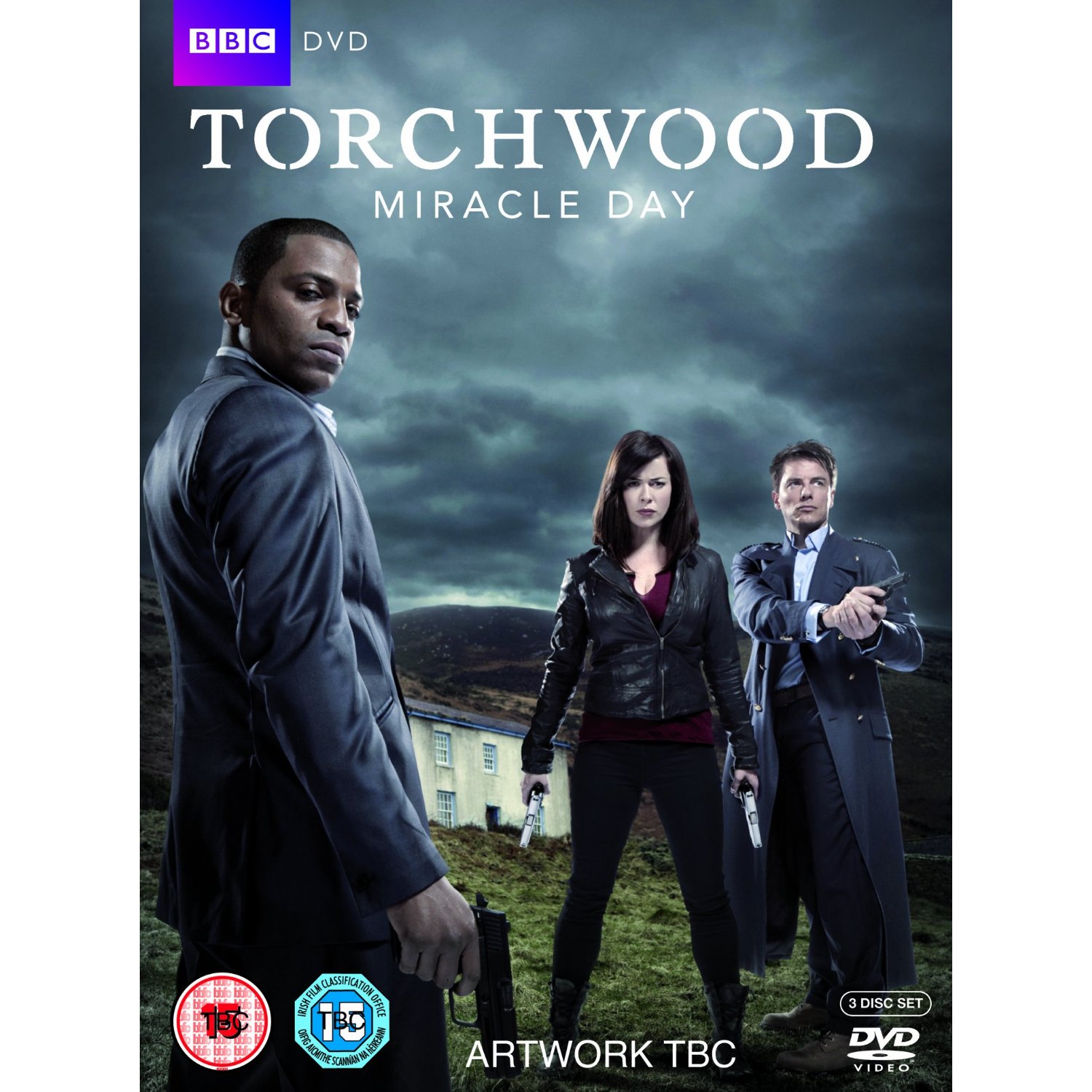
OK, so apparently, this is how you can tell that Torchwood has become a joint US-UK production:

While the previous jackets of Torchwood featured the entire team in varied/neutral postures (the boxset of seasons 1-
3, the DVD of Children of Earth), or even a stylised abstract (the boxsets of season 1 & season 2), this one has everyone carrying guns (and a mean-looking guy in a suit who could advertise for Hollywood FBI). And, as a bonus, Eve Myler in a highly sexualised aggressive posture (the two guns pointed downwards, the leather jacket, the tight-fitting pants. She could be any number of pseudo bad-ass heroines).

*bangs head against wall*


[1] Not that I particularly liked Torchwood, but I just happened on this while browsing Amazon.
ETA: mind you, the US jacket for Children of Earth isn’t half-bad in the bad-ass babe department, either…

Men, women and Important Things

Tags: blog, links, , 8 Comments »

So, by now everyone’s seen Niall Harrison’s article about the (mis)representation of women in reviewing. Not everyone might have seen the followups: Juliet McKenna, Kari Sperring (who has started an awesome list of women to read), and Sherwood Smith, who has a great reflexion on which viewpoints are considered the norm (and great comments, too).

One sentence in what Sherwood wrote struck me:
The sense that men write about Important Things and women write about Domestic or Sentimental Things still appears to be pervasive.

And it did make me want to elaborate, on something I’ve been meaning to blog about but haven’t so far. Sherwood touches on it a bit, I think–mostly in the context of literature–but I kind of wanted to take it a step further.

See, the one thing I hate most about gender perceptions? That Important Things cannot be Domestic or Sentimental: the pervasive notion that the things men do are Important; and the things women do are not (I’m using “the things men do” in a sense of traditional gender roles–which, thankfully, have evolved quite a bit since the 19th Century). That somehow, it’s still more Important to talk about war and fighting as a soldier, still more Important to talk about science and inventing things–than it is to talk about taking care of a household, about raising children, all the myriad things that are the traditional prerogative of women. It’s sort of like saying, “as a woman, you cannot have worth until you do the things of men-essentially until you become a male surrogate.” And it saddens me, because it dismisses so-called “feminine” activities as unworthy: it’s just another way of putting men first. [1][2]

Not sure how clear this is? I’m struggling to articulate it into words.


[1]Don’t get me wrong, I think it’s important that women who want to have a career be able to have one; that as a woman, you can be a soldier or a scientist or any occupation that catches your fancy. But I do think that as a man or as a woman, you should be allowed to stay home and take care of the kids, and be a good homecook–and not be ridiculed. That being a feminine boy should have as much worth as being a tomboy–which is so not the case today.
[2]Which is why we need more books that aren’t about traditional male activities such as saving the world and getting the girl; books like Jo Walton’s Lifelode, and Cao Xuequin’s Dream of Red Mansions (which, pretty impressively, was actually written by a man).

Common misconceptions about the Aztecs

Tags: articles, blog, , , No Comments »

It occurred to me I did this kind of post for Ancient China, but never got around to it for the Aztecs…

-The jungle. Ok, if I had a cookie every time the romantic and torrid jungle atmosphere was mentioned in connection with the Aztecs, my kitchen would be overflowing. The Aztecs were a people of Central Mexico, with NO jungles whatsoever in a radius of several dozen kilometers. Their country was wet marshes; and after the wet marshes, high mountains with dry and cold weather. To get the jungle, you had to go down to the south–a week’s march or more, beyond the boundaries of the empire for most of its existence–, and enter the bits that are now the South of Mexico and Guatemala. Those are Maya lands (see below for Aztecs, Mayas and Incas). There is a lot of jungle-based imagery in Aztec mythology (jaguars and quetzals, for instace), precisely because those jungles were far-off lands the Aztecs didn’t see every day and thus acquired an aura of magic and preciousness, a bit like the Orient in the 19th Century became this glamorous place where everything was larger than life.
And Apocalypto is a terrible movie about Mesoamerican people, incidentally (it depicts life among the Maya, but does a terrible job of it).

-Aztecs, Mayas, Incas, it’s all the same, isn’t it? Er, yeah, sure. Just as the Finns, the Spanish and the Ancient Greek are secretly all one people. The Aztecs, as said above, occupied the centre of Mexico from the 14th to the 16th Century; the Mayas held the South of Mexico, Guatemala, Honduras, etc., for a longer time than this (the last Maya city fell in the 17th or 18th Century, and the Mayas had been around for a while, even though their culture had changed a lot by then). The Incas were in Peru, which is more than three thousand kilometers from any of the aforementioned countries.

-The Empire: or lack thereof. You often find references to the “Aztec Empire”, which immediately evokes a political structure akin to the Roman Empire, ie a unified territory under the rule of a centralised administration. Truth is, the Aztecs were nowhere as organised. The word “hegemony” would be a better description of how they ruled: strictly speaking, they had under political control only a very small bit (the centre around their capital Tenochtitlan). When they conquered a new city-state, they didn’t integrate it by modifying the power structure: they tended to keep the ruling family in place, and force them to pay tribute to Tenochtitlan. And that was pretty much it. There was no attempt at political, territorial or even cultural homogenisation: the Aztecs spread by extending their tribute area, and you didn’t have an empire so much as a collection of loose city states owing a very loose form of allegiance to Tenochtitlan. (the Incas, on the other hand, were very good at the Empire business, sometimes relocating entire populations in order to make sure the political cohesion was preserved). It’s part of the reason the Aztecs fell so quickly: their hold was so tenuous (but still grudgingly felt, considering their demands for exorbitant tribute), that the Spanish had no trouble convincing the rulers of the neighbouring city-states to support them instead of the Aztecs.

-All bloodthirsty savages, I tell you: not going to linger on that one because I’ve harped on it enough, but of course not true. Human sacrifice is a bit of an arresting custom, which means that any other achievements tend to get lost under the weight of disapproval. The Aztecs were awesome astronomers, pretty good physicians for a medieval time period, and they also had a pretty equalitarian society (again, for the time period), with possibilities for commoners to reach pretty high on the social ladder, and a fair amount of women’s rights (right to divorce and inherit, for instance) that most medieval societies tended to forget altogether.

-We’re very well informed about what the Aztecs were like: ha. Mostly, not that much. The conquistadores did a terrific job of destroying the Aztec culture as they found it: there are Aztec descendants, and a handful of codices, but the evidence of how the Aztecs lived is terribly thin. As far as monuments go, again, there are very few Aztec monuments left: the shiny pyramids everyone thinks of when the Aztecs are mentioned tend to be those of Teotihuacan (which predates the Aztecs by 5 centuries or more), and of course Mexico City was built on the ruins of Tenochtitlan, which means very few remains of the Aztec capital.