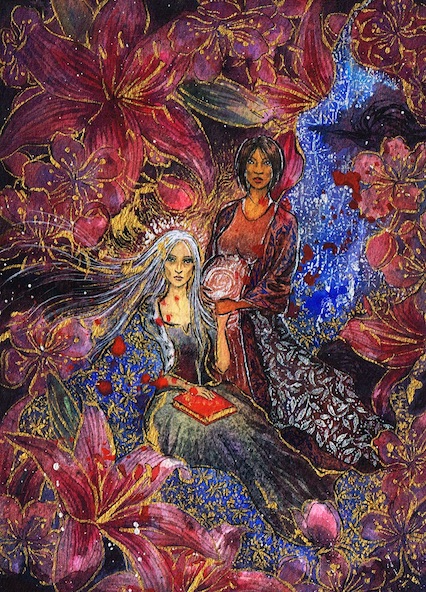
(illustration: mother-to-be Françoise and her wife Berith from my novel The House of Binding Thorns, art by Likhain)
So I thought I’d collate the result of this thread: I was writing an article and asked on twitter for recommendations of SFF written by people of colour which had mothers in them: specifically, the mothers had to be present, had to be fully realised characters in their own right (which meant lives of their own, not just mothers of their children), and had to survive (SO MANY DEAD MOMS, SO SO MANY). I haven’t seen a lot of those lists around so I thought it was worth preserving in an easier format than the very long twitter thread.
I got so many awesome looking suggestions that I thought I’d collate them here, to have a list that showcases the wide variety of diverse books/media that has mothers in them. If I don’t specify the format, it’s a book (because the overwhelming majority of suggestions are books). I haven’t done anything other than cursory checking on a lot of these (mostly my TBR list has grown by a ton, hahaha), so this is mostly a collation of works as presented on twitter. I also added a few works that weren’t genre because they seemed important to me and/or I enjoyed them a lot.
Octavia Butler, Xenogenesis, Parable of the Talents, Wild Seed
Zoraida Córdova, Labyrinth Lost and Bruja Born
Zen Cho, Sorcerer to the Crown
J Damask, Wolf at the Door
Somaya Daud, Mirage
Aliette de Bodard, In the Vanishers’ Palace, The House of Binding Thorns, Citadel of Weeping Pearls
Nicky Drayden, Temper
Tananarive Due, The Good House, The African Immortals series
Alexandre Dumas, The Count of Monte Cristo
Susan Ee, Penryn and the End of Days series
Zetta Elliott, A Wish after Midnight, The Door at the Crossroads
Eva L. Elasigue, Bones of Starlight: Fire Within and Bones of Starlight: Abyss Surrounding
Silvia Moreno Garcia, Signal to Noise
Hiromi Goto’s books
Andrea Hairston, Will Do Magic for Small Change
Heidi Heilig, For A Muse of Fire
Keri Hulme’s The Bone People (not genre)
Nalo Hopkinson, The Salt Roads, Brown Girl in the Ring, Midnight Robber, New Moon’s Arms
Justina Ireland, Dread Nation
N.K. Jemisin, The Broken Earth trilogy, the Inheritance trilogy
Maggie Shen King, An Excess Male
Victor LaValle, The Changeling
Ken Liu, The Wall of Storms
Marjorie Liu, Sana Takeda, Monstress (graphic novel)
Jeannie Lin, Gunpowder Alchemy
Dana Lone Hill, Pointing with Lips: Six Days in the Life of a Rez Chick(not genre but fabulous)
Eden Robinson, Son of a Trickster and Trickster Drift
Nisi Shawl, Everfair
Rivers Solomon, An Unkindness of Ghosts (complex discussions of the mommy and mammy stereotypes)
Kong Sheng and Li Xue (dir.), Hai Yan (script, original book), Nirvana in Fire (TV series, not genre)
Tasha Suri, Empire of Sand
Na’amen Tilahun, The Wrath and Athenaeum series
K.S. Villoso, The Wolf of Oren-Yaro, Aina’s Breath
Gene Luen Yang & Sonny Liew, Shadow Hero (graphic novel)
JY Yang, The Red Threads of Fortune, The Black Tides of Heaven
My deepest thanks to everyone on twitter who contributed to this: Amal El-Mohtar, @cassanette, Mathieu Leocmach, Elle Gato, @quartzen, @robop_style, @mjfgates, Barb Chamberlain, Tim Pratt, Matt Weber, Alex P, Farah Mendlesohn, David Doherty-Jebb, @tamagoDono, @jacobkesinger, @gixininja, Larisa Breton, @wendleness, Jaymee Goh, Shenwei, Glen Mehn, Rachel Gutin, Tade Thompson, @krfabien, Jeannette Ng, Charlotte Honigman, @Llyfrgell_Babel, LA Knight, Daniel José Older, Jaz Twersky, Shweta Adhyam, Pat Thompson, @zrinkas, Cherie Priest, Astrid Bear, @wendylbolm, Alex Brown, Sarah Demp, @eaflu, T.S. Miller, Alix E Harrow, @puck1008, @3rdragon, @chaoticsequence, Amy Goldshlager, Laura Blackwell, Amanda Earlam, Laura Zats, @SKLiteratiPress, Luther M Siler, @nursing_z, Abbey Kirberger, @garik16, @Kvnrmrz, Kate Heartfield, Naleighna Kai, Brad M, @melissavandew, @peskierhouslion, Rachel Neumeier, Theresa Derwin, Alix Martin, Matt Young, Steve Roach, Mimi Mondal, Swordsmith, Kevin Sells, @popelizbet, Liz Argall, Orin Bellizio, Leigh Harlen, Evelyn Chirson, @queeriophile, Tonya Cannariato, @sarahtherebel, @ultragotha
(I wasn’t able to use everyone’s suggestions and I hope I haven’t forgotten anyone because the thread ended up quite long–if you contributed a book and your name is missing please ping me, it’s my eyes glazing rather than my striking you off deliberately. Also, if you’re an author and want to correct something, notably where your name is in the alphabet–I went by last names but I wasn’t always sure which name was the significant one–please feel free to get in touch.
This list is rather weak on indigenous people: part of it is my own fault for phrasing the question only in terms of PoCs. I’m quite happy to add authors: it must be a book-length work, novel or novella, or TV series/movie/graphic novel, and the author must identify as PoC or indigenous. I do mean the author not the characters.
I maintain this list in a haphazard manner, due to time constraints: I can’t promise to be speedy about updates).
So this is just a very small addendum to this great Ken Liu quote (which should just be framed in workshop rooms to be honest!). On showing vs telling: first off, that Kate Elliott article is definitely worth reading.
Second, a few additional thoughts. Like Ken says, showing works, among other things, because of shared frame of reference. We all assign, for instance, the same value to looking someone in the eye. So for instance, I can say that character A meets everybody’s gaze squarely and (unless I provide further context) the majority takeaway will be “honest, straightforward person”. In the Vietnamese culture I’m familiar with, that same behaviour means “rude person, lacking respect to elders”. But I can’t show that, because you can’t guess. I have to tell you. I have to explain, because otherwise it’s confusing if I merely show character B get very angry at character A when they keep looking people in the eye.
Similarly I could write something like this.
“Have you heard about the latest Metropolital exams results?”
“No, what happened?”
“They’re unusually good this year for the orbital.”
“Oh.”
Now if you don’t know what Metropolitan exam is, I’m going to have to unpack this, and why the results are good, and something about what it means to the characters, otherwise you’re just going to be very very confused. It won’t have to be a long thing, necessarily. But it’s still way more words and more telling than a similar reference everyone would immediately get (like a high school getting their percentage of admission to Ivy League places, to take just one example off the top of my head).
And yes, if I were writing for an audience that knew all of this I could cut down on what I’m telling. But just think for a moment, will you, when asked to show not tell: “who’s getting shown things and how can they afford not to be told?”
(there’s other layers to show vs tell & other divergences of use and aspects to consider of course! I’m just unpacking this specific one)
(slightly expanded from my twitter thread this morning. As usual this is not gospel truth, but things that happen to work for me. Do feel free to take what you want from this and throw what doesn’t fit)
This morning’s thoughts: likeable characters. I think they’re overrated.
We can argue and should argue a bit about what makes a character “likeable”. It’s highly subjective, partly dependent on moral values of society, partly dependent on people: I happen not to care much for arrogant characters, so any character that has this flaw has got an uphill climb to be sympathetic to me. On a societal level, because misogyny is still embedded in the way things work, men in positions of power doing terrible things in service of a good goal are generally seen as ruthless, women as bitches.
However, for me the root issue with “likeable” is that I don’t think characters have to be likeable. For me, they have to be interesting, which isn’t quite the same. This actually ties into a larger thing: the end goal of writing is to hold the reader’s attention. And the thing is, there are many, many ways to do that: which one you use depends on you as a writer, and the audience you target, and the conventions of the genre you’re writing in, etc. (a lot of writing advice is about tools and tips and things you can use to hold attention–they’re not so much unbreakable rules as ideas to keep readers turning pages).
If we’re just talking characters: you can make readers care about what happens to them, which is the “likeable” part of the equation. But you don’t have to. You can also make readers wonder and fear what they’ll do next. You can, conversely, just decide you don’t much care about characters and that the important thing is unfolding the setting around minimal portraits. You can also decide that the twists of the plot take precedence over the characters. Again, valid choice. (you need a minimum obviously. No characters at all usually makes it hard to engage the reader because we’re wired to pay attention to that. We’re also wired to find people or people-equivalent in stories so it tends to happen regarless of whether you plan for it or not)
A few tricks I used for terrible characters (*cough* Asmodeus *cough*): it helps if they’ve got a code, even if it’s a horrible code, because we tend to value highly people who stick by principles. It also helps if their goals are things we approve of, even if the means they then deploy to achieve them are horrendous, again because–as a society–we tend to judge strongly on intent: Magneto wants to protect all mutants from being persecuted, Holland in VE Schwab’s A Darker Shade of Magic series wants his London (which was unfairly shut off and devasted) to be prosperous again. Asmodeus in my own The House of Binding Thornswants to protect his own House and his own people in an environment of scarcity.
Sarcasm and honesty also help: again, values vary, but hypocrisy in our societies is particularly hard to swallow. Sarcasm/irony in particular have high correlation to fascination: we pay attention because we want to know what the characters will come up with next, and because it feels like they’re speaking truth and/or seeing things more clearly than the other characters (they may not actually be seeing things more clearly, but that’s another issue!). Think of Spike in Buffy the Vampire Slayer: part of his appeal is that he always seems to puncture holes in the main characters’ earnest plans.
Power dynamics–how terrible characters behave with their inferiors–is an easy but neat trick. The expected is they’ll be terrible, so if you buck it you get a lot of extra mileage (plus, I never really believed the dark lords who kept killing their subordinates would have many subordinates left after a few months–everyone would just leave and find a more reliable employer!) [1]
Another easy one is the reedemable feature, though “redeemable” is again highly dependent on people (one person’s redeemable feature is another’s breaking point): easiest one is their caring about people, especially forgiving them if they do something terrible character doesn’t approve of (you’d be surprised how often, in media, terrible characters turn out to only pretend to care about their loved ones, or to kill their loved ones as soon as they do so much as stray from the path).
Note that the goal of all of this isn’t to actually redeem the character: all of this is way below the hard work, atonement and change of heart required for redemption. The goal is just to make sure the reader gets invested into the character–you lose, as a writer, if they wander off or throw the book across the room because the character is so horribly a turn-off and the plot so uninteresting they’d rather be doing something else. And yes, a lot of this–like “likeable”– is still highly subjective: again, the trick is appealing to your readership (trying to appeal to everyone with “universal” values has, at least for me, always resulted in character design by committee: the results are bland, unlikely to make anyone throw books at all, but also unlikely to make people want to fight for your characters!).
Another word of warning that you probably don’t want to try this trick with every single character in your novel/short story/etc.: terrible characters tend to shine best when they’re mixed with other characters that readers care about. Or at least characters who are decent. You can make every single character in the novel terrible–it’s been done and it’s been done with great success–but it’s going to be a more difficult tightrope to walk because terrible characters will have no one to be contrasted against, and no one they can bounce off, either. A little goes a long way.
So basically, my recipe: give the reader something to cling to, make sure that said thing doesn’t break halfway through the plot (and if it does, replace it with something else before it completely breaks)–and throw in enough unexpected to be surprising. That, and doing the usual prayer of the writer aka “please please let everything not implode in mid-flight”!
(and yes, speaking of mid-flight: I have a book that just came out. It’s set in a ruined and dark, decadent Paris; it has dragons, Fallen angels, alchemists, revolutions and betrayals; a terrible character and decent ones, and I had a lot of anxiety fun writing it–I would love it if you checked it out. Sorry, had to say it. Sales are how I get the chance to write other books °=°)
[1]In The House of Binding Thorns I balanced the power dynamics of a particular scene on a knife’s edge: I had one scene which involved one character in the power of a terrible one, and I deliberately played with the expectation of terrible things happening to create tension–in particular, at one point, consent is asked for, which very much went against the grain of such scenes. It was a deliberate choice.
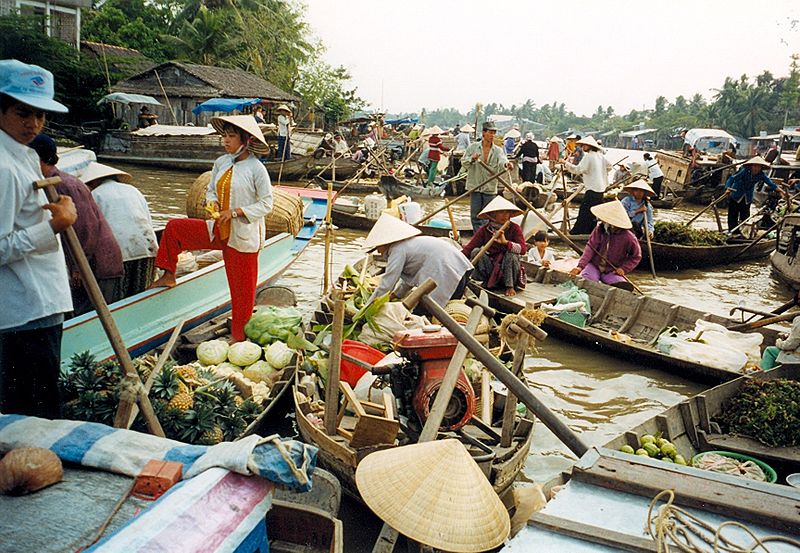
(image: Floating market of Cần Thơ, Mekong Delta, Vietnam, from Doron. Used under a Creative Commons Attribution-Share Alike 3.0 Unported License)
So technically I have other things to do besides writing a blog post (*cough* novel *cough* Christmas presents *cough*), but hey, what do you know.
Let’s talk “broken English” for a moment.[1]
It won’t surprise you that I have issues with doing accents or broken English for POC characters. That’s because the “broken English by POCs” stereotype is common and pretty harmful.
It’s almost systematically deployed with foreigners speaking English, to various degrees (generally people from Europe etc. get heavily accented English, and POCs from outside Europe get broken English with an accent to boot). It’s harmful because this becomes, whether the author intended it or not, the defining trait of ESL speakers and non-white speakers of “non-US/UK” English (roughly speaking, it gets worse the further away from the “First World” you get): I know it’s unfair, but by and large, the only thing that people remember from a given character is whether they speak “funny” or not, before they remember other quirks and traits, because not speaking properly erases everything else in the reader’s memory (and part of this, I feel, comes from the overly negative judgment passed on people who fail to speak English “properly”, which is a cultural thing and one that I personally find more than a little odd).
It perpetuates the notion that no one (or only the favoured few, which then takes on the mantle of the “civilised people” and all its attendant baggage) can speak English properly in XX Asian/African/other majority non-white country. It’s a Hollywood staple; it’s a feature in US/UK work that is, as far as I’m concerned, overly present (again, because of the overly negative value placed on not speaking English properly).
I’m not saying everyone in Asia/Africa/etc. speaks perfect, accentless English. There’s certainly some amount of not really great or accented English going around–but because of the underlying stereotypes, having this in fiction contributes to a narrative that I’m not very happy with.
[1] I make a difference between dialects and broken English: it’s a degree difference. Broken English is meant to be “not right”: it’s not gramatically correct, and it’s used almost solely to demonstrate that the speaker is not fluent in English. It’s not the same as, say, Singlish, which is English spoken natively by people who have a different idea of it. Though some times people will think that Singlish is gramatically incorrect and not “real” English. Let’s just say that’s very wrong, and very very hurtful to actual speakers.
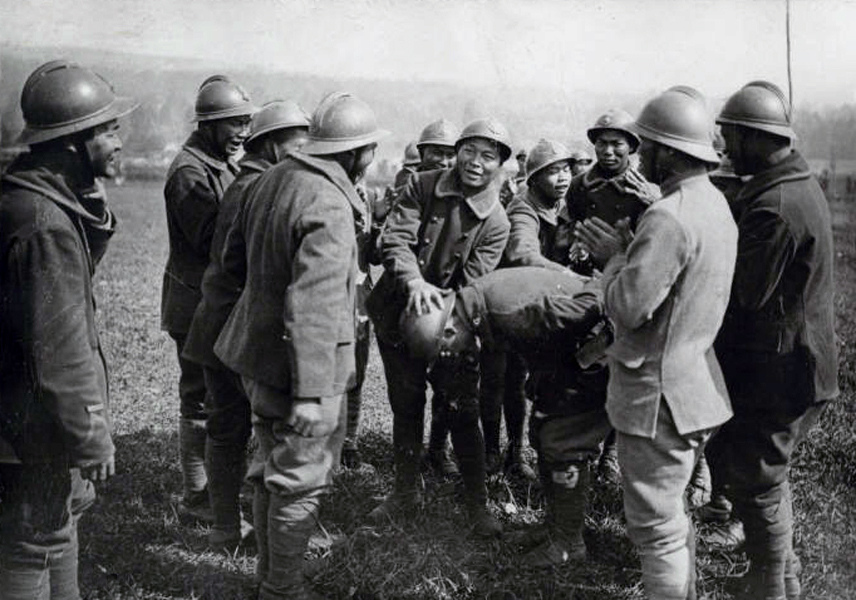
Image: Marne battlefield. Annamites playing in a camp 1914 -18. Photo credit: Manhai on Flickr, reused under a Creative Commons Attribution Generic License.
GoH speech at Stranimondi in Milan, October 10th, 2015
(standard disclaimer: I’m not a historian. I’ll be talking here not about the academic discipline, but about history in the sense of the past and the narrative of the past)
Thank you all for having me here in Milan (and wow, for turning out so numerous 🙂 ). Today I want to talk about history, and the importance of history in Science Fiction and Fantasy.
The first part might seem a little counter intuitive: SF is traditionally a genre that looks towards the future, and history, by definition, looks backwards several decades. But actually, history is a really important thing in genre.
First, history is a source of inspiration. A lot of SFF is retellings of historical events: the obvious one is Guy Gavriel Kay (The Sarantium Tapestry is a retelling of the Nika riots in Justinian I’s reign, to the point where you can guess what will happen if you know the underlying history). Kari Sperring’s The Grass King’s Concubine draws its inspiration from the brutality of the Industrial Revolution, contrasted with a legendary kingdom that is more unmoored in time, but hearkens to older myths and legends. But it’s not only fantasy: some of Yoon Ha Lee’s short stories are based on Korean history; Ann Leckie’s Raadsch Empire (and many intergalactic empires) draws from the Roman Empire (see patron-client relationship, for instance). For the writer, it’s a source of details, events, etc.: most scenarios we can think of have already been played somewhere, somewhen.
But history is also a powerful force in plots: see Isaac Asimov’s psychohistory, and the shaping of mankind’s history (ultimately doomed to failure, for it is the failure modes of science that interest Asimov: the Mule is the one unpredictable factor that deals a serious blow to Hari Seldon’s work). More obviously, history drives a lot of fantasy, in which the key to the plot is often an understanding of history/myth (Brandon Sanderson’s Mistborn trilogy, for instance: the historical excerpts turn out to be key in defeating the Lord Ruler at the end of book 1). History becomes a search for truth, to part layers of obfuscation (sometimes merely lost to time, sometimes to active malice: the origin of the eponymous Game of Fives in Kate Elliott’s Court of Fives, crucial to navigating the underground of the city, has been deliberately obscured by the rulers of the country). Myth and history take on a literal, pressing meaning–it can kill you if you don’t work it out in time.
Knowledge of the past is also a source of power, particularly in post-apocalyptic narratives (Walter M. Miller, Jr.’s Canticle for Leibowitz, Rosemary Kirstein’s Steerswoman, Zelazny’s Lord of Light). In Science Fiction it’s often (obviously) the history of science (because science is primordial), and the recovery of what has been lost, which enable the rise of a new, technology-based society.
I’ve just used truth and power, which are tricky concepts. Both truth and power raise the question of how much you can trust history–how much of it is one truth, and how much of it is written by power. Many cultures have a saying about history being written by the winners, and it sadly holds true. Losers of wars, people dominated by hegemony, don’t get to write their own histories (I’m currently researching the history of colonial Vietnam, and some of the history books written by the French, even today, are… breathtakingly out of touch in presenting a benevolent empire, the loss of which we should mourn for. Yeah. Right).
History is what is passed down, what is told. It is an act of storytelling: the story of how we got there, who our ancestors were, how our relationships with other people, other nations, have been shaped. And, on a smaller scale, we all have family history, family myths. And one thing about stories: they are choices, about which events to present and how to link them into a narrative. Like all stories, history is about erasure. About whose stories don’t get told, about who falls by the wayside.
It’s visible in so many places, but one of the ones that’s struck me recently is the history of genre. As I was writing the first part of this speech, the books I kept coming up with as examples were all written by men. And I’ve seen it happen, again and again online: when asked which books they remember, people cite men (often white men). Ask someone to make a list, and most likely it’ll have 90% men on it (and a token woman, generally Ursula K. Le Guin). Read the history of the genre: most of the people they quote as influential and seminal are men (I read a very depressing history of fantasy yesterday that quoted 90% men, and grouped all the women under “women in genre”). Women and people of colour aren’t remembered, don’t make it into the canon–and yet we’ve always been there!
Obvioysly, in my work, all of these aspects are important. First off, history is a personal inspiration: Obsidian and Blood (Aztec/Mexica history/what if magic was real), Xuya (an alternate history in which the Vietnamese empire is still extant, which draws on multiple sources of Vietnamese myth and history), The House of Shattered Wings (19th Century history of Paris, where magic is powered by Fallen angels and there’s a healthy traffic in angel body parts. Yeah, a little gruesome never hurt anybody).
Also, I am fascinated by history as myth-making, and the truths/lies we tell ourselves: The Weight of a Blessing/Memorials both have different stories of a war, and different people/different generations have different understandings of what the war means. It’s a war with 2.5 sides: the two that actually fought each other, and the 0.5 that supported them with troops–and everyone has a different idea of what the war meant, of whether they won it or not, and what it cost them. The people who weren’t invested see it as a tragedy because waste of life. The people who lost it see it as tragedy, but it’s a different flavours: because emigration and massive uprooting and losses (and I didn’t have space for the third side!).
But lately, I have been most concerned about erasure.
My novel The House of Shattered Wings is set in a post-apocalyptic Paris; it’s my love letter to the city, to the 19th Century novels I loved reading as a child. It merges the backstabbing politics of the beau monde in Alexandre Dumas’s Count of Monte Cristo (the thin veneer of civilisation hiding something as cuththroat and as primal as the bandits they so decry); the heartbreaking poverty and the preoccupation with redemption found in Victor Hugo’s Les Misérables.
It has a lot of references to the history of Paris: it’s set mostly on Ile de la Cité, the historical heart of Paris, and there are gardens and rivers and good food–and people struggling to survive amidst the remnants of a magical war that tore the city apart. Notre-Dame is a major location. The society is a distorted version of the Belle Epoque, with its dresses and swallowtails and elaborate balls, dinners and receptions in salons; its obsession with appearances and having access to the latest fashions (in this case, spells, food, and safety, because this is a post apocalyptic society!) I read 19th Century novels; history books; etiquette books (one particular scene, which involved working out the particulars of putting on and taking off one’s gloves, took me an entire afternoon to research. The etiquette of gloves is hideously complicated!)
But the book is also about the stories that don’t get told.
I was raised in a multicultural household–hearing different languages from French to English to Vietnamese, and as a child of two cultures. As I grew up, I gradually became aware that I was Other (just as, incidentally, Dumas was Other). Exotic. Not conventionally pretty–too small, too slight, too weird (though to be fair, being a nerd probably didn’t help 🙂 ). People like me–like my maternal family–never seem to feature much in those stories beyond the stereotypes of the time period (the Exotic Princess/Slave Haydée in Monte Cristo, the Slave Ali, …)
When I was researching the book, I read up on the indentured colonial workers during the World Wars, and particularly Vietnamese ones. During WW1, they were shipped to the front to fight the Germans, and then shipped back again, because of course colonial workers couldn’t be allowed to remain in France. Everyone had their place–and theirs was to be civilised, far far away in a different land. During WWII, thousands of Vietnamese were “recruited” (press-ganged, in reality) to join the war effort, and put together ammunition. After the war ended–because the country was in ruin, because no one really cared about a bunch of Vietnamese–they remained in their camps, their services sold off as indentured workers. They built bridges and cars, picked up harvests, started rice planting in the marshes. It was seven years after the end of WWII when the last of them was sent home: they had been in the country for 13 years–a lifetime.
And I wondered what it would be like, to be one of those men. To have this burning anger–this growing despair of ever getting home–of wondering if your country will even be there when you do come home, because the war has cut off all communications and no one really knows for sure what’s happening in Asia. To feel, keenly, that you are an outsider–both to your own culture, because of what you went through, but because you’re not French, and the fact that you’re not French is written on your forehead.
Those are the people we don’t talk about. Those are the people who survived in the cracks and the hidden places, away from the centres of power. Some of these men returned home (straight into another war of independence and the messy, messy road of Vietnam becoming a nation). Some of these married, and remained in France–in spite of the fact they weren’t made welcome.
I wanted to write their story. Or, at any rate, part of their story (it being always difficult to do justice to such a complex and long subject in just one book!)
This is why, in The House of Shattered Wings, one of the main characters is Vietnamese–and not only that, but a Vietnamese ex-immortal, a mythical being torn away from his land and struggling to survive in his growing loneliness. It’s why, halfway through the book, you discover that there are other mythical beings, from places that aren’t the Christian, French mythology–and that they have always been there. That they have built their own places, their own imperfect refuges, in the spaces that no one wants.
And, similarly, as I mentioned before, there are lots of Galactic Empires based on the Roman Empire, but few on a Confucian Chinese/Vietnamese model (and those that do often reinforce negative portrayals of an ossified, exotically cruel empire, an image that has nothing to do with the stories I read as a child). It is, in other words, “Othered” China/Vietnam.
(true story: when I was young and read a lot of books, some of them were set in China or Vietnam. They all had this veneer of not very well done outsider narrative, oddly fascinated with things like exotic beauties, cruel and barbaric punishments for the slightest crimes–and magical martial arts/mystical wisdom. I thought they had to be set in Fake China, because the things that they depicted were so completely out of kilter with the ones I was used to that they had to be a fictional land. Now, looking back, I’m not sure whether I ought to laugh or cry).
So I wrote Xuya. It’s my attempt to create a far-future galactic Empire on a different basis, where Confucian cultures are dominant as a matter-of-fact. Where literature is important, scholars are valued, and family always has your back. And where AIs and ships are part of the family, rather than being among themselves, or the property of the military/private traders.
People have commented that it’s not a place where they would choose to live, because the atmosphere feels stiflying to them. To me, it doesn’t, particularly–filial duty and family are important, and they can supersede any individual’s wishes–but of course that’s not the dominant narrative of SF. SF is based on the colonial ethos of America and the Conquest of the West: rugged pioneers striking out for themselves, democracies, capitalism (because that is the only possible society of the future). SF is where families are strictures rather than comfort–gaining independence is the only possible way forward, the narrative we are meant to applaud and praise.
I disagree. I’m not saying it’s a worthless narrative. But it is not the only one. It is not the one I grew up with. Those are not the things that are important to me. There are not the things I want to write about. And, also, history has shown that there are plenty of societies, from the ones that only respect strength and warriors, to the ones where learning and scholarship and important, and warrior is a second fiddle. And I think it’s important to acknowledge this diversity.
It’s important that history is about the multiplicity of people and stories and cultures, and that SFF should be, too.
“My dear Sam, you cannot always be torn in two. You will have to be one and whole for many years.” I love Tolkien (and Lord of the Rings has been a huge formative experience), but in my head, I’ve always been arguing with this quote.
There is a persistent myth going around that I call “the myth of entire”. Its most common form is that to be a true artist, and write masterpieces, you have to devote your life to the art, without the constraints of financial rewards (else there is the risk of writing cutrate potboilers to pressing deadlines), a day job (which holds you back from having enough writing time), or children (because children eat books and childcare is an all consuming activity).
This is bullshit.
We are not whole. We are never whole. There are always other demands on our time, other things we need to do. I am an engineer and a writer, a mother and a child and a grandchild, a friend and a helper and a volunteer. My life is made of broken and small pieces, of snatches of time where I write or grab moments for myself. All our lives are made of snatches and pieces, because most of us don’t live in ivory towers. Because we are in the world in multiple places, with multiple people, doing multiple things–and that is the wellspring from which writing comes. We don’t write about writing. We write about life.
I’m not saying you shouldn’t write for pleasure rather than money (and it is true that writing to too punitive deadlines isn’t always conducive to producing quality work, though in my admittedly limited experience there is little correlation between the amount of time in which something is written and the quality or appeal). I’m not saying you shouldn’t leave your day job (because jobs are time consuming, can be crushing, can have expectations that you need to devote your life to them), if that’s what you want. I’m not saying that you’re a failure if you decide to set aside the writing for a time to take care of children (because children *do* eat books, and because while modern society expects us to juggle everything, it’s abundantly clear that we can’t be super parents, super employees and super writer at the same time). But to imply that people aren’t dedicated/motivated enough if they choose to do other things besides writing? That is harmful beyond belief.
And on that last… I could run on the other subjects for a bit (hey, future blog posts!), but let me talk about motherhood for a while. It comes pre-burdened with a set of powerful expectations, not least of which is that entirety: that it is a threshold beyond which you become a parent (and especially a mother, because let’s not kid outselves that is an ungendered thing) and should be only that–that you’re a bad mother if you don’t take care of your children 24/7, and that there will always be time for your own personal pursuits when your child(ren) is (are) older. That, in other words, you have to be an entire mother, or an entire writer, but that you cannot be both things at the same time.
At this stage I’m going to insert a series of choice curse words, but you already knew that.
See… the thing is, it is time consuming, to be a parent. There are periods when you don’t sleep more than a few hours at a go (aka the first few months). There are periods when you can’t keep your eyes off the child for fear they might inadvertently commit suicide (and it’s amazing the number of ways that kids can find to come to harm. It’s like they have a sixth sense for the worst thing to do at any given time). There are periods when they need you; periods when you play with them, read with them, talk with them, help them do homework… All of these are times when no writing happens.
But. But…
I’m a parent. I gave birth. Of course life is never going to be the same. Of course it’s going to be different; and so is the writing. Things get thrown out of whack for a while, but you know what? After a while, they settle in a new balance, and there’s nothing wrong with that.
Do I write the same way I did before I had kids? No, quite honestly. The days of binge-writing for days at a time are not going to be back for a while, unless I take a writers’ retreat (and even then, those require arranging childcare). Do I have less time than I had before? Of course. There are no miracles, and I still need to sleep. But time is… different. I manage it differently–in smaller snatches, in stolen moments–stories in bits and pieces, novels written scene by scene on my commute (where I can be sure of not having to childcare), blog posts hammered together in minutes or hours spent in stations or in airports.
I write at night, a lot, after the toddler is in bed and I can breathe collapse for the day. And some days I just stare at my screen and decide I should go watch a silly (in the sense of “not engaging brainpower I no longer have”) TV series, or just hang out on twitter and chat for a bit. I’ve found that I can revise or blog or tweet quite successfully on small snatches of time, but can’t do that with my first drafts, which require more mental investment on my part.
I’m aware that I am very lucky. I have a supportive husband who’s quite ready to take care of the toddler when I’m travelling to cons, or when I need to hammer out a draft. I have family nearby and a support network to fall back on. I have fabulous friends, offline and online, who support me and read me and urge me to go on and on, even when I feel like giving up. And I know not everyone has that and that some people have a much harder time of it, but still? If you have children and you’re writing or painting, or doing any kind of creative work? This is your right. This is your leisure time and what gives you joy. And people who try to tell you otherwise can %%% right off.
(and again, there’s no harm in
a. not having children. This is an entirely personal choice.
b. taking a break from wiriting if the entire combination writing/parenthood is making you be perpetually out of spoons. If writing feels like a drudge and you’re exhausted all the time–and believe me, I have been there–then you don’t have to do it, and you’re not a failure if you don’t. Again, it’s a very personal choice)
So this is only half a rant, because to properly do this I would need to document (a lot), and to reread stuff (a lot, too). But I’ve been simultaneously reading some genre books, and researching the French colonization of Vietnam in the 19th Century (and the history of SE Asia in that time period; aka researching book 2, the sequel to The House of Shattered Wings), and the contrast is… stark.
Let me put it bluntly. A lot of depictions out there miss the mark by a rather large margin. The things I see a lot: our hero(es) fighting and overthrowing the colonial system. Our hero(es), whether colonist or colonised, being almost exempt of colonial prejudice. Clean, simple fights for independence where the people rise against their oppressors and become democratic and free.
Right. Where to start.
See, the thing with colonialism; the thing that made it so scary and so heartbreaking and so anger-inducing… is that it was pervasive. I’m not saying people didn’t fight against it, but that those that did were a minuscule proportion of the population (and you’ll find that even the people fighting against colonialism had some pretty hair-raising prejudices, too).
The truth is, the vast majority of people in the colonizer nations saw it as natural. As the proper, God-given order of things. France (a democracy at the time, let me just remind you of this) massively voted *in favor* of intervention in Annam, because it would make ordinary citizens’ lives better; because it would enrich the country, and it’s very clear from reading period texts that no one saw any problem with that, across all social classes. In fact, lower social classes saw the colonies as a place you could go to in order to make your fortune; where even a poor person could live in luxury with native workers at their beck and call. And the people who were “progressive”? They saw the colonised as children–as immature people who needed to be educated and taught “civilization”; protected from themselves against their will (as opposed to people who just wanted to dominate and plunder).
The scarier thing? People in the colonized countries thought it was the natural order of things, too–that they had to modernize in order to compete, to become more Western because the West was so clearly intrisincally superior. They massively sent their children to Western schools–to London, Paris–to be educated as a mark of privilege. Some countries, like Japan or Thailand, managed to modernise and retain national independence and some measure of culture. Others… had less success.
Yes, there was military superiority. But the reason it went on for so long? Is because there was a complete and utter certainty that the colonizers were right. That the colonies were owed to them; that the riches of other countries were theirs for the taking. And other people at the colonizer nation took in those riches and benefitted from them and thought it was due to them too (and yeah, there was terrible oppression going on in colonizer nations, too. Intersectionality=> things are complicated, but again, it was an attitude of all social classes. There was no solidarity of, say, the French working class with the Indochinese. They thought the Indochinese were scary foreigners who stole their jobs and spoke a funny language [1]).
Read period pieces. Read Agatha Christie. Read Maurice Leblanc. Or any other writers. The Empire is the *background*. Racial prejudice is casual, omnipresent.
Also, another reason why colonialism worked? It’s not only military superiority. And it’s not trade (“the French in Vietnam” version of this didn’t focus much on trade, at least at first). It’s “divide to reign” tactics where existing cracks (or new ones) between social and ethnic groups were exploited to make a new society. A society that’s busy tearing itself apart has no time for organized resistance. It means that not everyone is oppressed equally (this is why I have little time for utterly oppressive evil empires. If everyone is miserable and oppressed and with no hopes whatsoever for the future, the government isn’t going to last for long). It means people are treated very differently depending on where they come from and where they live: colonies aren’t nations, but a hodgepodge of different political systems on a “whatever works” and “let’s keep them weak” set of principles (just see the rather stark differences between Tonkin, Annam and Cochinchina in the 19th/early 20th Century). It also means that there are side benefits for everyone, too (which in no way compensate for the other, horrendous costs, of course): social advances and health advances and science advances, all brought to, say, the population of Annam as a way to demonstrate that the imperial government didn’t have their best interests at heart, but that the colonizers did.
And when push comes to shove… when all of this complex equilibrium finally disintegrates–well, it’s going to be messy. There will be blood. There will be violence. There will be massacres and purges. I’m not saying it shouldn’t happen, or that revolutions shouldn’t ever take place, but there is always a price to pay. There is always a fight for which faction will rule the country, or what the country will even look like–where the capital will be, who will be in government, what languages will be spoken, whose culture will come to shape everything from administration to the history that is taught. And this isn’t just wars of independence: the repercussions linger on for decades after that. The Nigerian Civil War, the Rwandan genocide, the Vietnamese/American war… I can go on, and on. It’s almost textbook.
You’re going to say it doesn’t matter–that Science Fiction and Fantasy needs to focus on the heroes, the extraordinary, the clean and easy revolution that we can get behind with no moral qualms. But see, the thing is…. by focusing on this, we perpetuate a great illusion, a great silence. We forget that empires like this only exist because of the consent of the majority. We forget that inequal systems only work because people are convinced everyone is in their proper place, and are convinced it’s their moral right to oppress others, or that being oppressed is inevitable; or, worse, that the oppressors are morally superior or more meritorious. Because we only talk about heroes, we like to think that, back then, we would be among them. And the truth is–most of us wouldn’t. Actually, most of us aren’t, today (to take just one example, we buy cheap clothes, cheap electronics made with labour in horrific conditions).
You know the scary truth about Evil Empires? We make them while being utterly convinced we’re in the right. We uphold them by acquiescing every day to decisions that make our lives better and richer, and forgetting how we impact other people’s lives. And we seldom–so so seldom–have the sheer, admirable, almost impossible courage to overthrow them; and to deal with the high, bloody and messy cost of doing so.
[1] Yeah, some things don’t change. *sigh*
ETA: and in case you’re wondering: yup, of course I deal with some of that in my novel The House of Shattered Wings. My alternate, devastated France has had a colonial empire for a while, and it shows. Characters are affected by the colonial mindset, whether it’s those doing the colonising/benefitting from it (Selene, Madeleine), or those getting colonised (Philippe, Ngoc Bich). And yes, it makes for some thoughts in their heads that can be unpleasant and uncomfortable–but also, I think, to things that need to be shown.
The Chosen One is a very common trope: the special one; the one chosen by the gods/the magic/the plot; the one who has unique powers or ends up saving everyone, because no one else has the ability to. It’s quite common: you find it in narratives from Harry Potter to David Eddings’ Belgariad (and that’s just relatively modern examples, there’s plenty more earlier ones), and also out of genre, in numerous movies or books (Die Hard, …).
I have a lot of sympathy for this trope–I understand the need, on a visceral level, for role models; and for those role models to be extraordinary, and for enormous stakes that requires enormous abilities to face. But I also have issues with it.
The main thing I take issue to is the narrative of specialness. It’s the myth that you have to be special to matter, or else be doomed to be an unimportant sidekick. The myth of the One; the persistent notion that there can only be one protagonist in a given story strand; instead of a chorus of people who all matter and all work together to achieve the same goal. It’s the myth of the Lone Leader, the Lone Scientist, the Lone Hero–there’s so many examples of it it’s fair to say it’s become utterly pervasive in our culture (I’m looking at you, Hollywood movies).
It feels to me like a dangerous narrative in a number of ways: the first and most obvious one is that it’s often played as exclusionary. If a character doesn’t have special abilities–if they’re not Chosen–then very often, they don’t get a story. Oh, sure, they might get a sop thrown at them: a subplot, one or two episodes in a series. But in the grand scheme of things? Protagonists are special. They must be, else they’re not interesting.
But most of us are not special; most of us aren’t granted unique powers, or amazing capacities. Should we therefore judge whether we’re worthy of a story based on what most of us do not have and can never have?
Part of the mythos of the Chosen One, of course, is that they must be alone. They can have a team around them, but in the moment of reckoning–at the climax, when they must show their mettle, they have to be alone to face the antagonist/Dark Lord/ murderer/etc. This, after all, is the main reason why they were given those abilities. And this always troubles me, because things often don’t work that way in life. Though we are alone in many instances (not least of which are the hours of our birth and of our death), we achieve many things as a team. Achievements like sending people to the moon were not made by a lone genius working in a lab, but by teams with different capacities and skills. Over-valuing people’s capacity to be individualistic turns easily into a paean to selfishness and self-centredness, and negates the value of teams and of building communities around us, in a way that I find troubling.
A corollary of this narrative is that, very often, the Chosen One can do no wrong: how could they, when they have been anointed by the plot? There are far too many Hollywood movies in which the hero does the exact same thing as the villain and isn’t lambasted for it because he’s the hero and the rules don’t apply to him [1]. Torture is OK if the hero does it! Murdering people is ok because they’re saving the world! Etc.
The other aspect of uniqueness/specialness that bothers me is when it gets applied in slightly different circumstances, among a body of marginalised people: it’s the token.
It’s the one woman being quoted whenever people are making list of women in Science Fiction and Fantasy, which almost always include Ursula Le Guin and no one else (see the male respondents in Clarkesworld’s survey of writerly influences). It’s the one POC/the one queer/the one marginalised person whom everyone thinks of when asked to think of POCs/queer/marginalised–and it’s great that people are thinking of them! However, there are many many more marginalised people working in genre, and all the rest tend to get forgotten while people feel quite happy about their reading or recommending habits because they included a marginalised person. And in some cases (more than you’d think), people try to justify at posteriori why this person is included on the lists and no one else is, with things like “she’s great, she’s not really like other women” (or equivalent saying for other identities).
This, needless to say, is not helpful.
It’s not helpful because it erases others, as said above; and it’s not helpful because it tends to make that person the One, aka the reference for all things female/POC/queer/etc.. It magnifies a single narrative at the expense of all the others (see Chimimanda Adichie’s “The Danger of a Single Story”), which carries the very real risk that any subsequent voices in that sub-category will get labelled “inauthentic” because they don’t feel similar enough to The One, or “superfluous” because they are too similar (yeah, you can’t win. Funny that. Or not).
And, finally, it’s not helpful because you don’t have to push it very far to see that it’s essentially a “divide to reign” tactic. There is little space for more than one person at the table: therefore, if you want to be at that table, you have to be the One (you can push for more space, but it’s freaking difficult without being in a dominant position; or you can decide to leave and make your own table–thereby making the field poorer [2][3]); and you have to conform to what’s expected of you at least in some degree, if you want to be accepted. Like the Chosen One trope, this narrative is essentially encouraging lack of solidarity.
I’m not saying that things are that bad and that marginalised people are throwing each other under the bus all the time! (quite the contrary in fact). But the narrative is there, and it’s pervasive; and it’s quite easy to buy into it without realising it; and it has a lot of undertones that I don’t much care for, and I’ve been meaning to unpack it for a while. So there you go.
I may be quite grumpy about it, but I think it needs to be said–again, it’s not the specialness per se I object to. It’s the fact that it’s become the dominant and, above all, unquestioned narrative; and that we’re much the poorer for it.
[1]I could have said “she”, but we know that it’s 90% likely our hero is a man.
[2]I’m well aware that “the field” is a tricky proposition–I mean “Western Anglophone, dominant culture”, but there are a lot of implications there about the importance of dominant fields vs others, the choice of centring attention on it, etc. It’s beyond the scope of this post: there are discussions of this over the web, like this one.
[3]I really feel this shouldn’t be in a footnote because it’s important (but it’s not really relevant to the main body of the post, so…). A lot of people (marginalised and others) just leave without making a fuss or even a noise, because when the situation seems overly stacked against you and you don’t feel welcome, why would you bother? And if they don’t make a fuss, then very often the majority doesn’t think anything is wrong, because they’re not affected and from their point of view nothing is happening. And then one day, possibly, the majority wonders where the minorities went. Yeah. Right. Silence does not mean everything is well.
I’m ten, and voraciously reading–bespectacled, and a head shorter than everyone in class, good at maths and utterly oblivious to the fact that I’m different from everyone else (only later will I work out that the string of people asking me “where do you come from” are comparing me to a class that’s 99.99% white and Catholic, and where the next most diverse person is the lone Ashkenazi Jewish kid, who probably isn’t having a great time either). I take to Science Fiction and Fantasy [1] like a fish to water: people fleeing this world for another; the wonders of space and faraway history where magic is real–where a farmboy can rise to become king; where ordinary people can stop evil in its track; and where science is a force for good, and the future has everyone equal without questions of creed and race.
There are a few… wrong notes, though. I cannot help but notice that Tolkien’s heroes are basically Europeans; and that the Easterlings–yellow-skinned or swarthy–seem to be mostly fighting on the side of evil. I cannot help but notice that most of the cool things in the future seem to be happening to men; and that, for all the talk about appearances not mattering, most women seem to need to be blonde, and young, and beautiful; the dark-haired, yellow-skinned ones mostly seem to be left by the wayside or to be antagonists.
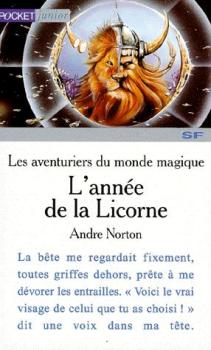
In the midst of this, Andre Norton’s Year of the Unicorn is a breath of fresh air. Gillan is dark-haired and more clever than pretty; and she waltzes through the book on (it seems to me) nothing more than sheer strength of will, and a stubborn refusal to be left behind, or to take anything at face value. When she does get left behind, she fights tooth and claw to find her husband; and make a place for herself in a world that doesn’t want her.
I love Gillan; and I reread the book over and over. It’s not, after all, so hard to see why.
There’s a lot of books in my reading that feature China, or some representation of the Far East–I read them all like I read invented worlds, because the China they depict is so out of touch with my family stories (I won’t say my family stories are all positive! Vietnam has… a complicated relationship with China)–surely they have to be about some kind of fictional China/Far East that doesn’t exist. They speak of martial arts and inscrutable, passive people awaiting to be saved; of some fount of mystical wisdom that awaits the traveller. I think fake!China must be some kind of faraway land invented by writers, because it cannot possibly be the real thing.
I’m in my twenties, and I still love maths, and work to make a living out of it. I discover the American Library in Paris, and discover Le Guin; and it’s like a revelation: SF doesn’t have to be about equations and maths. The SF that speaks to me is about people in the future, about their interactions with technology and with each other; but I’m less interested in whether the technology is feasible. I design feasible technology for a living; and books that strongly focus on this as an element remind me too much of my day job.
As I’m checking out all the Le Guin books ever written from the library, I read The Word for World is Forest. Many, many years later, someone tells me that it’s an allegory of the Vietnam War. I blink, because I know all about the Vietnam War; because it’s shaped my entire childhood; and this isn’t the image that I have. My Vietnam War involves pain and heartache and displacement, and massive family upheavals–not this odd (though good) story about colonists savagely exploiting an alien species, and the natives rising up against them. I realise, then, that there are always several sides to a story; and that not all stories are given the same precedence.
I start writing. I have a master’s degree in science, and general knowledge of physics and electronics; and yet I still do not feel confident that I can write science fiction. I have this image–propagated through books and discussions on forums–that true science fiction is rigorous scientific extrapolation (whether that science is mathematics or anthropology), and I feel I don’t have the credentials for any of this. It will take me many, many years to understand that this set of expectations is stifling and silencing me; and that I’m my own worst enemy, telling myself not to write because I’m not good enough. That I’m far from being the only one in this position or with this experience–that definitions of “proper SF” can end up being a cage for writers and readers alike, an excuse to dismiss everything that doesn’t seem to conform.
I still read books. Most have silent women, or women who use their looks as a weapon. There are no female friendships. There are no mothers, no families. People drink coffee and speak English, and most of them are blond and pale-skinned. When someone who does look or sound familiar appears; when someone seems like they’re going to respect their ancestors and value their families–they’re the aliens. They’re the funny guys with odd customs colonists meet, the ones they try to commerce with or understand or (in the worst cases) subjugate. They’re the invaders that have to be fought back for the sake of civilisation.
And I think “what civilisation?” I wonder how people like me fare, in the future. Or in the re-imagined past of fantasy. Probably not well.
I publish my first stories. I go to cons. I meet other people, offline and online, and start having my first long discussions about genre. I start thinking about what SFF really is. I meet other POCs, other women; learn about feminism; read a lot of essays. I learn that I am not alone; that others have had those same experiences; that others struggled or are struggling, trying to reconcile their love of SFF with that feeling that those universes have passed them by.
And then it hits me: if I want to have a place in those futures, in those reimagined pasts, I’m going to have to be like Gillan. I’m going to have to forge ahead, in the footsteps of those that came before. I will write my own stuff. My universes do not have to be white, or scientific, or sterile and lonely. And, if I don’t write my own experiences, my own cultures–then who is going to write them for me?
I wish I could say it goes without a hitch from there on. That I don’t have the odd conversation (“you write wonderful aliens!” in reference to my future diaspora Vietnamese people); the shouts from various corners telling me I don’t write proper SFF. The nagging doubt that perhaps–just perhaps–they’re right, that there’s no place for me at this table. It’s nonsense, of course. It should be. But thirty years of conditioning are hard to break through; and pushing through boundaries sometimes feel like pushing through tar.
That’s me and SFF, I guess? I feel kind of embarrassed sharing this, but I think it needs to be said–I’m not writing because of politics, or because I want to preach (well, sometimes I do want to write about specific themes that speak to me. But who doesn’t?). At heart, I’m writing my stories: the stories I wanted to read as a child, the adventures in space where I don’t have to feel excluded; the fantasies where you can be small and dark-haired and Asian and still be a hero. At heart, I’m sharing my side of the story, and the things that matter to me–war and exile and devastation, relationships between mother and child and extended families and how these evolve and change in the future. I love SFF. I want to see it thrive and grow and change; and include more and more people from all walks of life. And some of those changes will be uncomfortable. And some of those new stories by new writers won’t be for me or won’t speak to me, and that’s quite fine, because they will speak to someone else.
I hope that things will continue to change. I hope that the taste for this kind of stories grows; that there will be a wider appetite for them as people discover them. I want a future where it’s ok to write the kind of stories I wanted as a child; and where people read them and enjoy them and it becomes a new, significant chunk of the field (and it’s already happening, to some extent, for which I am very grateful). I want the field to reach outwards, step after step after step; until the table is large enough to include all of us on the margins, and we all learn to appreciate and love each other’s experiences and conceptions of the future–for, if SFF isn’t about openness of mind and change, then what is?
[1]It will be many years before I am aware of science fiction as a genre and consciously seek it out; but even before that it makes up the bulk of my reading.
(collated and expanded from twitter because I feel this should be saved somewhere)
Having a think on stories that question gender roles. There’s two tactics: one is to define different ones: frequently inverting the existing ones, i.e. women fight! men take care of babies! The other is to have societies where gender divisions are much less sharp, or non existent (or where gender itself is fluid).
They both have their attendant issues: inverting roles, I feel, just reinforces the notion that the gender divide exists. Though you can push this to absurd limits; or hope that flip makes people question assumptions, I worry that it simply doesn’t work that way, and that people simply think: “oh, same things, except we’ve inverted roles!” Different roles with the same boundaries just keep boundaries in place: if you’re saying, for instance, “look, in this book women are warriors/cool badass assassins/magicians and they’re the heroes”, you’re unconsciously (or less unconsciously) reinforcing the stereotype that only fighting is worth writing about: i.e. in our world what matters are “male” coded values, and you’re effectively saying that a woman is only worth talking about if she behaves like a man. It’s subtle (or not so subtle), but in our societies you can see it in the value we put on work: women who work (and thus do “traditional male” stuff) have more value than women who stay at home and raise babies (and thus do “traditional female” stuff). [1]
Also, when inverting roles, one can easily invert clichés rather than actual gender roles. See; women don’t fight! Of course they do. Of course they’ve always fought (see Kameron Hurley’s brilliant takedown), and history erases that because it’s written a certain way.
(and let’s not even get into different cultures having different gender expectations: for instance, Confucian society frowns on men fighting because it thinks that it’s puerile and that the true value is being learned. Though there tends to be a constant in all societies that raising children is not really work at all *sigh*).
The approach with less sharp/non-existent gender divisions (which includes fluid gender and non-binary gendered people who aren’t gender fluid) is more difficult, and runs the risk of presenting an idealistic society, and erasing stuff that goes on. No gender prejudice at all in the future, for instance, though I hope we do get there eventually, feels very far off in the sense that history has shown that we’re very good and very sneaky at maintaining prejudice.
All in all though, would rather plump for less sharp gender divisions? Call me idealistic but I want a future/an imagined society that’s pleasant, that speaks to me, and that has women/genderfluid people doing all sort of kickass things without gender divisions (and men doing the kickass things they want too, whether that is raising babies, crying or having typically “female” coded behaviours). In House of Shattered Wings, I tried very hard to have little gender prejudice and few gender roles: the soldiers in the war are indifferently male or female, and same with the heads of Houses, who are split half and half, roughly. Arguably the most ruthless and talented head of House is Claire, who’s a woman (the others have a definite tendency for over-confidence and schemes that blow up in their faces).
ETA: about having completely different genders (invented ones that are neither male nor female), something I haven’t tackled here: I feel it can work, but that it’s tricky to do well? If you don’t differentiate your genders enough from the existing ones, people will still fall back to the existing gender boundaries? (and also, of course, it still presents a society with sharply defined gender boundaries, which reinforces the notion of “proper” gender roles, which I’m personally not a fan of).
Yeah, I know, this isn’t really a post. More like me working out things, and I feel like there’s tons of other things that really need to be said on the subject! I would love to hear other people’s take on this?
[1] While, of course, not being worth as much as men. Because.